Netanyahu's Political Struggle Creates Tense Israeli Parliament Opening
The opening of Israel's new parliament was marked by tension as Prime Minister Benjamin Netanyahu's calls for a national unity government met fierce opposition.
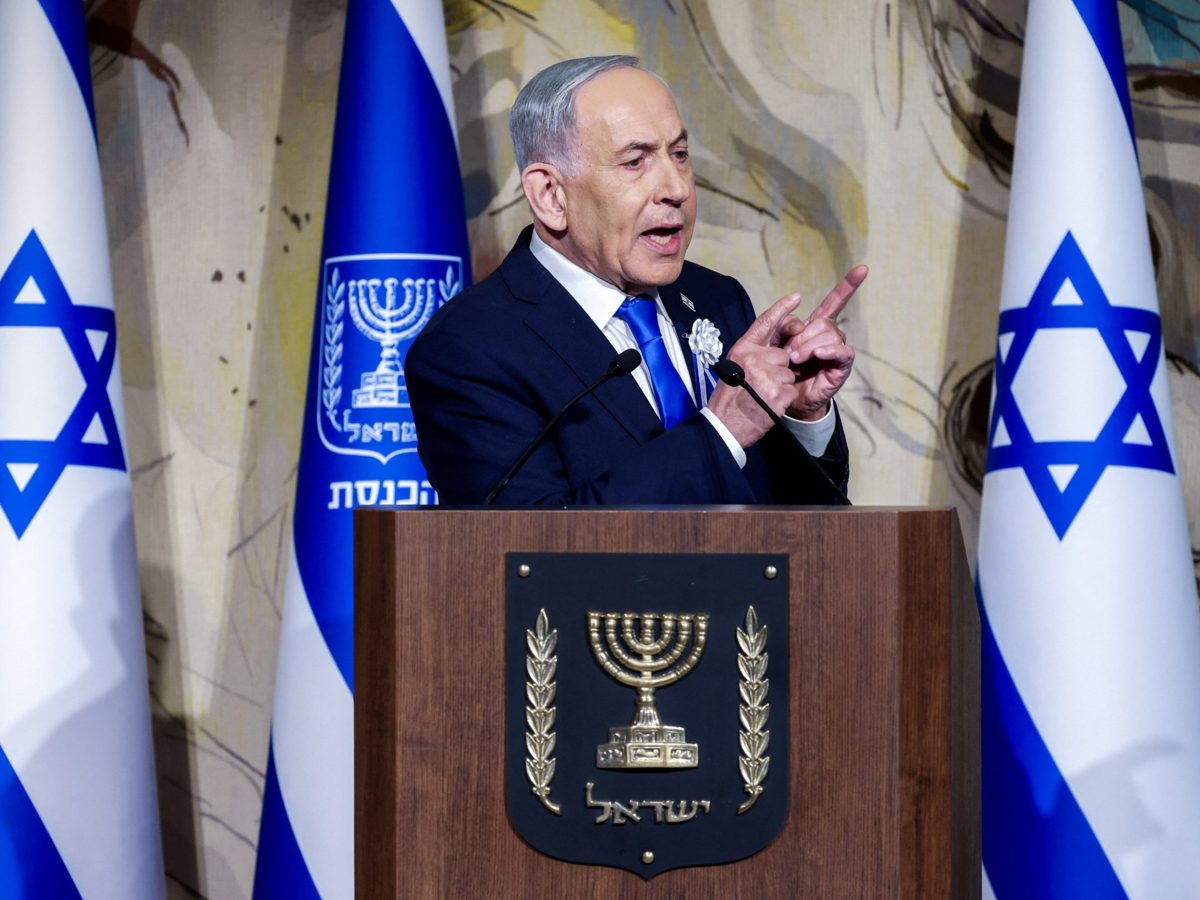
The inaugural session of Israel's new parliament (Knesset) was fraught with tension, as Prime Minister Benjamin Netanyahu called for a national unity government to secure his political future, drawing strong reactions from the opposition. Netanyahu, hoping to cling to power, advocated for a unity government among Jewish Israelis. However, the opposition, which now holds a majority of seats, responded with heckles, catcalls, and walkouts.
Highlights
- Netanyahu urged a national unity government with the opposition, citing internal and external threats.
- The opposition reacted strongly to Netanyahu's calls, with some Palestinian lawmakers walking out during his speech.
- Former Prime Minister Naftali Bennett exchanged barbs with Netanyahu and his wife, Sara.
- Gadi Eisenkot, tasked with forming the new government, canceled coalition talks with Netanyahu, declaring him "unfit for office."
- Analysts note that personality politics continue to overshadow party and policy discussions in Israeli politics.
Details
Netanyahu justified his call by pointing to the threat posed by Iran and the increased number of democratically elected lawmakers who are Palestinian citizens of Israel, whom he accused, without evidence, of seeking Israel's destruction. The Prime Minister stated, "It is impossible to handle challenges of this magnitude with a narrow government," opposing the possibility of a minority government that many analysts consider likely. The opposition reacted strongly to Netanyahu's accusations and appeals.
Even by the standards of Israeli politics, where personal rivalries have long played a significant role, Tuesday's session was unusually contentious. Incidents included former Prime Minister Naftali Bennett's verbal clashes with Netanyahu and his wife, Sara, and Palestinian lawmakers walking out in protest. Gadi Eisenkot, given the first chance to form a new government, subsequently canceled previously scheduled coalition talks with Netanyahu and declared him "unfit for office." If Eisenkot succeeds in forming a government, Netanyahu's political power will likely end, and his corruption trial will continue without the protection of the prime minister's office.
Why it matters
Netanyahu's potential political downfall does not appear to signal an end to the "personality politics" tradition that has long dominated Israeli politics. Experts suggest that Netanyahu "Americanised the party system in Israel and made Likud a populist party." The tendency of voters to identify with a leader first and then consider policies highlights the enduring importance of personal rivalries in Israeli politics. This dynamic can create a toxic environment where leaders can act without constraint, even accusing elected members of the Knesset of being terrorist sympathizers.