NASA's Swift Space Telescope Returns to Earth After Two Decades
NASA's Swift orbital observatory, which operated for over two decades, re-entered Earth's atmosphere after a rescue attempt to raise its orbit failed.
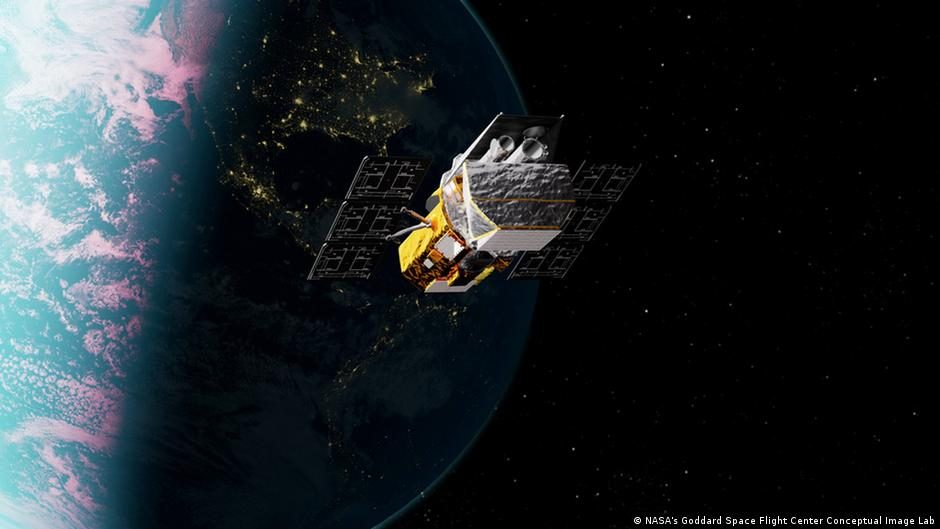
NASA's Neil Gehrels Swift Observatory has returned to Earth's atmosphere after more than two decades of service. The telescope re-entered over the North Sumatra region of Indonesia, with most of the spacecraft expected to have burned up during its fiery descent, though some components may have survived.
An earlier attempt to raise Swift's orbit failed, contributing to its re-entry. This was partly due to powerful geomagnetic storms triggered by solar eruptions, which affected the satellite's trajectory.
Highlights
- NASA's Swift space telescope re-entered Earth's atmosphere after nearly 22 years in operation.
- The re-entry occurred over the North Sumatra region of Indonesia at 12:39 PM UTC.
- A rescue mission by private company Katalyst Space, aimed at boosting its orbit, failed due to attitude control issues with the robotic spacecraft.
- Swift studied hundreds of supernova explosions and gamma-ray bursts during its mission.
- No immediate reports of ground damage were made following the re-entry.
Details
Launched in 2004 with a cost of $500 million, the Swift observatory was initially designed for a two-year mission. However, it far exceeded expectations, operating for nearly 22 years—11 times longer than planned. Its primary task was to study gamma-ray bursts, the most powerful energy explosions in the universe, but it also observed numerous other cosmic phenomena, including supernova explosions, black holes, and stellar X-ray flares.
In July, a private company named Katalyst Space launched a robotic servicing spacecraft called LINK to raise Swift's altitude. Unfortunately, LINK experienced attitude control issues shortly after reaching space, causing it to spin uncontrollably and eventually plunge back to Earth in September. Swift ceased its operations on October 20.
Why it matters
The Swift space telescope has made significant contributions to our understanding of gamma-ray bursts and other high-energy cosmic events. Over its operational lifetime, it provided data for nearly 7,000 scientific papers, leading to groundbreaking discoveries in astronomy and astrophysics. Its re-entry marks the end of a long and impactful period of observation in this field.