CSTO's Influence Wanes as Armenia Drifts Away, Former Allies Seek Independent Partnerships
The Russia-dominated Collective Security Treaty Organization (CSTO) is losing its grip on former Soviet allies as Armenia effectively boycotts the bloc and other members pursue independent security pa
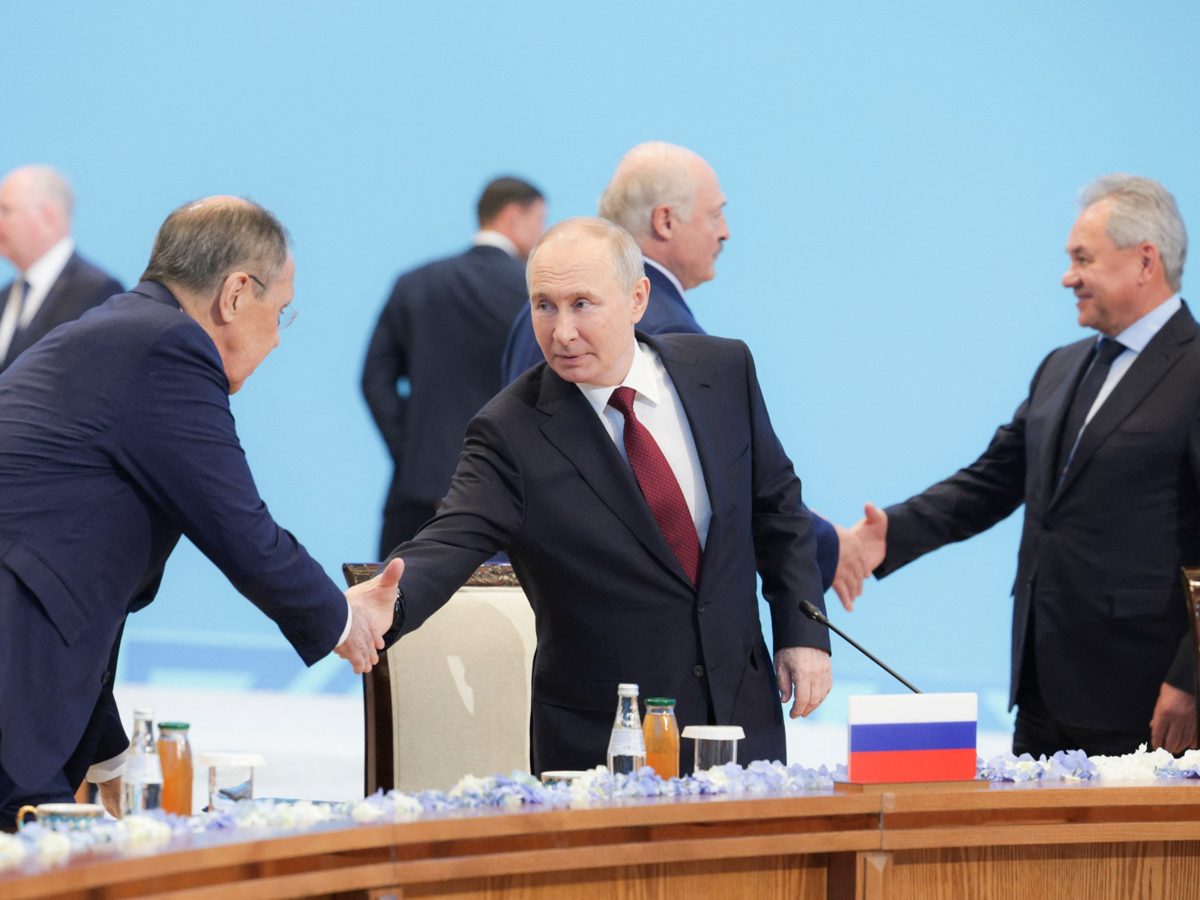
The Collective Security Treaty Organization (CSTO), a military bloc dominated by Russia, is experiencing a decline in its influence over former Soviet allies. Armenia's effective withdrawal from the organization, coupled with other member states seeking independent security partnerships, signals a weakening of Moscow's traditional sway in the region.
Russian President Vladimir Putin is set to chair a session of the CSTO's Collective Security Council, a meeting that holds significant importance given the ongoing tensions and the bloc's uncertain future.
Highlights
- Armenia has effectively frozen its participation in the CSTO since February 2024, citing the organization's failure to provide meaningful support during its war with Azerbaijan over Nagorno-Karabakh.
- Armenian Prime Minister Nikol Pashinyan stated on November 5 that "our interest in the CSTO has run its course."
- Experts suggest that Russia's preoccupation with the war in Ukraine and its weakening by Western sanctions have emboldened former Soviet states to pursue more independent foreign policies.
- The only "real" item on the Moscow summit's agenda is reportedly the security situation in Afghanistan, with particular concern over the threat posed by ISIL's Khorasan Province (ISKP).
- Some former Soviet nations are exploring new military cooperation formats, such as the Türkiye-led Organization of Turkic States.
Details
Armenia argues that the CSTO failed to uphold its core principle of mutual aid during the 2020 Nagorno-Karabakh war. Neither Russia nor other member states (Belarus, Kazakhstan, Kyrgyzstan, and Tajikistan) deployed troops to assist Armenia. This perceived lack of support has eroded Yerevan's trust in the bloc, leading it to pursue Western-leaning initiatives, including seeking European Union membership.
Kremlin spokesman Dmitry Peskov confirmed that Armenia "de facto doesn't participate in the CSTO's operations." Analysts believe Armenia's actions are strategically timed, leveraging Russia's engagement in the Ukraine war and its weakened state due to Western sanctions. Galiya Ibragimova, a Moldova-based expert, described moves to strip Armenia of its voting rights as "a demonstrative whipping."
Central Asian nations are also showing signs of distancing themselves from Russia. Uzbekistan has declined to rejoin the CSTO, while countries like Azerbaijan, Uzbekistan, Kazakhstan, Kyrgyzstan, and Tajikistan are conducting joint military drills under the umbrella of the Türkiye-led Organization of Turkic States. Russia, for now, appears limited to verbally expressing its dissatisfaction with these "disloyal" actions.
Why it matters
The weakening of the CSTO signifies a decline in Russia's traditional influence in the post-Soviet space. This shift is altering regional power dynamics, allowing Central Asian and South Caucasian countries to pursue more independent foreign policies. Furthermore, emerging threats from terrorist groups like ISIL's Khorasan Province in Afghanistan challenge the CSTO's ability to fill regional security vacuums, highlighting the growing importance of new security cooperation models.