Iran War Reshapes BRICS Ties But Also Exposes Divisions
While BRICS members agree on the need for a new global order, they face significant divisions on what that order should entail and how to achieve it.
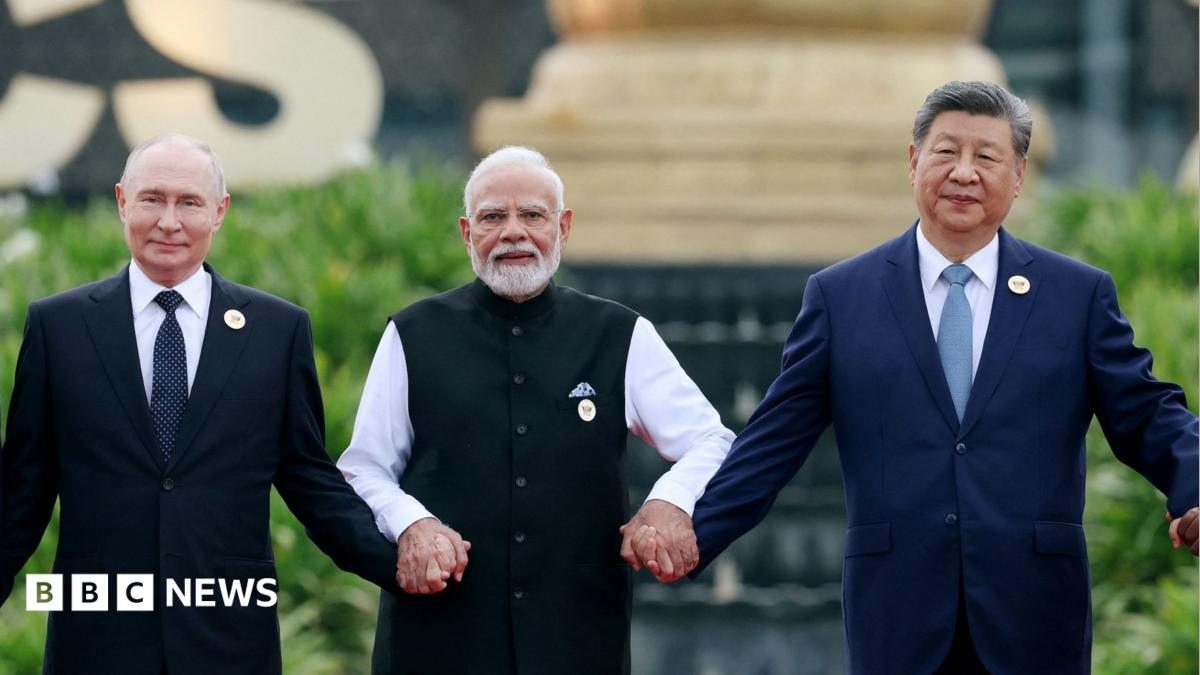
Leaders of the BRICS nations (Brazil, Russia, India, China, South Africa) gathered in New Delhi last weekend, re-evaluating their relationships in light of the Iran war's impact on global economies and geopolitics. The summit, hosted by Indian Prime Minister Narendra Modi, managed to issue a joint declaration despite underlying tensions among member states.
The summit revealed a general consensus on the necessity of reshaping the global order, yet significant disagreements emerged regarding the nature of this new order and its implementation. Countries like China, Russia, and Iran view BRICS as a vehicle to diminish the influence of the US and Western Europe, whereas India has resisted framing the group as an anti-Western bloc.
Highlights
- The BRICS summit provided a platform for member states to reassess their relationships amidst the backdrop of the Iran war.
- Indian Prime Minister Modi emphasized that BRICS nations should become "rule-shapers" but affirmed the group is "not against anyone."
- Despite notable divisions among members, the summit successfully delivered a joint declaration.
- Iranian President Pezeshkian and Abu Dhabi's Crown Prince Sheikh Khaled bin Mohamed bin Zayed Al Nahyan held the highest-level face-to-face meeting between their countries since the war began.
- The declaration called for "maximum restraint" regarding the Middle East conflict but made no mention of Russia's war in Ukraine.
Details
BRICS members comprise countries with histories of border disputes and even military confrontations, making them far from natural allies. For instance, India and China had a deadly clash on their disputed border in 2020, while Iran and the United Arab Emirates have been on opposing sides of the Middle East conflict. This context makes India's ability to bring these leaders together a diplomatic achievement.
The "New Delhi Declaration," adopted at the summit, condemned "attacks on civilian infrastructure and peaceful nuclear facilities" in the Middle East but refrained from assigning blame. It carefully framed support for a two-state solution and opposition to forced displacement of Palestinians within existing UN resolutions. Notably, it omitted any mention of Russia's war in Ukraine, a departure from previous BRICS declarations.
Similar caution was observed on trade issues. The declaration listed concerns over "indiscriminate rising tariffs" and condemned unilateral sanctions but stopped short of naming the US, likely to avoid Washington's ire. This suggests that some members were wary of provoking the US, especially after Donald Trump previously labeled BRICS proposals, such as linking central-bank digital currencies for cross-border trade, as "anti-American."
Why it matters
The summit demonstrated BRICS's capacity to create a space for rivals to engage and maneuver outside Western-dominated institutions. This is particularly significant as Iran seeks to deepen economic ties amidst US sanctions and a naval blockade on its ports. However, while members agree on the urgent need for a new global order, the precise nature of this order and the path to achieving it remain challenging questions.