Iran's Security Chief Meets Putin in Moscow, Delivers Message from Khamenei
Iran's top security official, Mohsen Rezaei, met with Russian President Vladimir Putin in Moscow to discuss regional security and delivered a letter from Supreme Leader Mojtaba Khamenei.
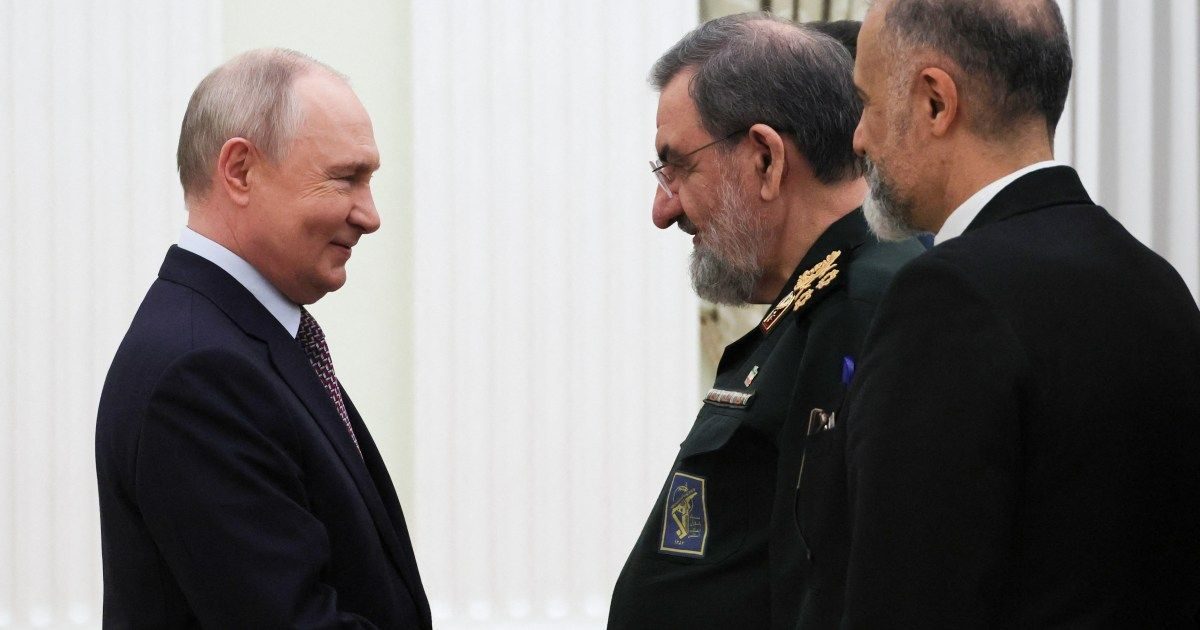
Mohsen Rezaei, Secretary of Iran's Supreme National Security Council, met with Russian President Vladimir Putin in Moscow on Thursday, November 6. The discussions focused on regional security, and Rezaei also delivered a letter to Putin from Iran's Supreme Leader, Mojtaba Khamenei. This meeting occurred amidst intensified diplomatic efforts to end the war involving the United States and Israel against Iran.
Highlights
- Iranian Security Chief Rezaei delivered a message from Khamenei to Putin regarding regional security and resistance against perceived US "aggression."
- Key discussions centered on post-war regional security arrangements and Russia's support for ending the conflict.
- Plans to deepen energy cooperation, including the construction of a gas pipeline from Russia to Iran, were also addressed.
- Iran stated it would not open the Strait of Hormuz or engage in negotiations with the US until its seven conditions are met.
- Russia and Iran have strengthened diplomatic and military ties under Western sanctions, signing a strategic partnership treaty in January 2025.
Details
Following the meeting, Mohsen Rezaei stated that he had significant discussions with Putin on regional security arrangements and Russia's support for ending what he called US "aggression" against Iran. Rezaei mentioned that Khamenei wished for the message to be delivered as soon as possible, and the trip to Moscow, planned almost a month prior, was postponed due to "daily discussions about the military situation in the region." Khamenei, in a written statement on Wednesday, had called for "not even the slightest inclination towards submission" to the US and for an "ever stronger" Iran to achieve "absolute deterrence."
Other topics discussed included plans to deepen energy cooperation, specifically the construction of gas pipelines from Russia to Iran. Rezaei indicated that this project, aimed at addressing Iran's gas shortages and enabling Russia to sell its gas to neighboring countries, was a significant part of the Kremlin talks. Putin reportedly reiterated Russia's readiness to provide support to end the war.
Rezaei added that he briefed Putin on a meeting held in Tehran in late October among Iran, Saudi Arabia, Turkey, and Pakistan, which the Russian leader welcomed. Separately, Iran's Foreign Minister Abbas Araghchi held phone calls with his counterparts in Kuwait, Saudi Arabia, Oman, Qatar, Turkey, and Jordan, focusing on regional developments and diplomatic efforts for peace.
Why it matters
This meeting underscores the strategic alignment between Russia and Iran amidst heightened tensions with the US and Israel. Their collaboration in energy and security sectors signals a joint effort to counter Western pressure. Iran's firm conditions for negotiations with the US and the flurry of diplomatic activities in the region are significant developments that could influence the balance of power and future conflict dynamics in the Middle East.