Wolf Biermann at 90: The Singer Who Challenged East Germany
One of Germany's most influential singer-songwriters, Wolf Biermann, celebrates his 90th birthday, continuing to advocate for freedom and challenge authoritarianism.
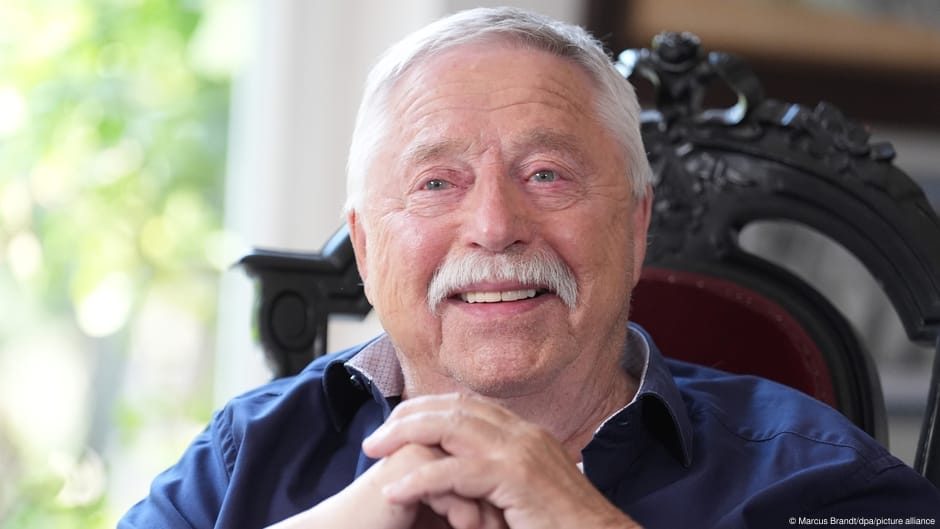
Wolf Biermann, one of Germany's most prominent singer-songwriters, is celebrating his 90th birthday. Throughout his life, Biermann has reflected contemporary German history through his songs and sharp wit, renowned for his defiance against the oppressive East German regime.
With his new album, "Unterm Haar nur Himmel" (Beneath Hair, Only Sky), Biermann explores the theme of inner freedom and independence. He continues to engage with current global issues, using his platform to voice critical opinions.
Highlights
- Celebrating his 90th birthday, Wolf Biermann releases a new album, "Unterm Haar nur Himmel," focusing on the concept of inner freedom.
- Biermann faced a performance and publication ban in East Germany in 1965 but maintained his dissident stance.
- He was stripped of his East German citizenship in 1976 during a tour in West Germany, a decision that sparked widespread protests among intellectuals.
- The artist criticizes leaders like Donald Trump and Vladimir Putin in his songs and frequently invokes "Lady Liberty," expressing his longing for freedom.
- Biermann is considered one of Germany's most influential singer-songwriters, often described as Germany's answer to Bob Dylan.
Details
Wolf Biermann was born in Hamburg in 1936. His father, a communist dockworker and resistance fighter against the Nazis, was murdered in Auschwitz in 1943. Raised with his mother's communist and anti-fascist ideals, Biermann moved to East Germany in 1953. There, he studied political economy, mathematics, and philosophy, and began writing political songs.
Biermann soon realized that life in East Germany was far from the communist paradise he had envisioned, a sentiment he openly expressed in his music. In 1965, the ruling Socialist Unity Party (SED) imposed a blanket ban on his performances and publications. Despite constant surveillance, his East Berlin apartment became a gathering place for dissidents.
In 1976, he was surprisingly allowed to travel to West Germany, where his concerts attracted large audiences. However, while on tour, he received news that he had been stripped of his East German citizenship. This decision led to significant protests from leading East German intellectuals and intensified the regime's crackdown on dissidents. Biermann fell into a deep depression but continued to sing about global injustices.
Why it matters
Wolf Biermann's life stands as a significant symbol of Germany's division and reunification. His struggle for freedom and human rights has been an inspiration not only in Germany but also for dissident voices worldwide. His continued activism at 90, addressing contemporary issues, demonstrates the enduring power of art to drive social change.